

To know which electricity tariff is cheaper you have to reproduce the whole bill under the same conditions. Comparing only the price per kWh can give the wrong answer if power, periods, taxes or additional services change.
Published by: Reazziona Renovables, S.L., electricity and gas retailer within Grupo Visalia. Last reviewed: 28 July 2026. This guide uses criteria from the electricity bill and tools from the CNMC. See the methodology and corrections policy.
The right formula: full annual cost
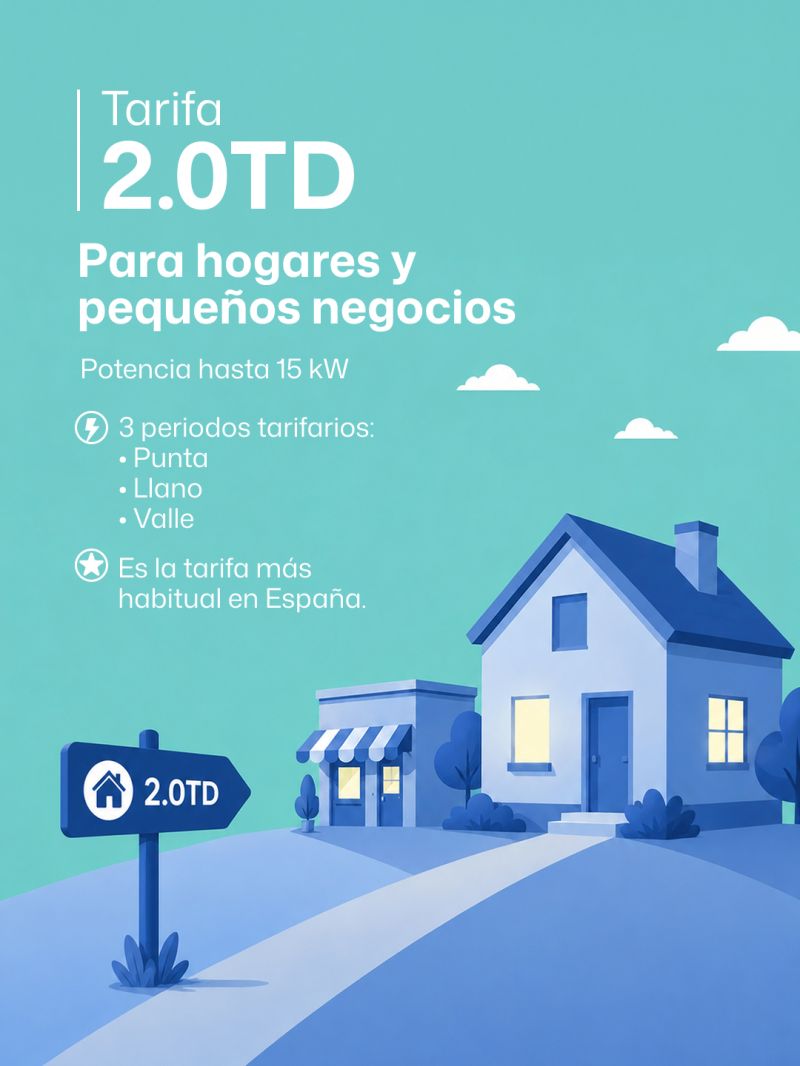
The starting point is your annual consumption by period. On a 2.0TD tariff with three prices, multiply the peak, standard and off-peak kWh by their corresponding price. On a single-price tariff, apply the same price to all consumption. Then add the power cost for P1 and P2, calculated from the contracted kW and the price of each period.
To that subtotal you have to add taxes, meter rental and any service you have signed up for. If there is a discount, separate the temporary saving from the price you will pay once the promotion ends. The comparable figure is the estimated cost over twelve months, with and without the discount.
What to check in each electricity offer
- Energy price: a single price, or different values for peak, standard and off-peak.
- Power price: it is paid even if you do not consume and it can vary a lot between offers.
- Duration and revision: identify until what date the price holds and how it can be updated.
- Lock-in and penalties: check whether there is a cost for ending the contract early.
- Additional services: maintenance, insurance or fees can wipe out the apparent saving.
- Taxes: always compare amounts on the same basis, all with taxes or all without.
Fixed price, by period or indexed
Fixed price all day
It makes forecasting easier and can fit if your consumption is spread out or you cannot move it to other hours. Stability alone does not guarantee the lowest cost, so you also have to check the power and how long the price holds.
Fixed price by period
It can benefit anyone who concentrates a significant share of consumption in off-peak hours. Use your real data: assuming a standard split when you work, cook or charge a vehicle at other times distorts the comparison.
Indexed price
The energy cost follows a market reference plus the items defined in the contract. It can change from one month to the next. Before choosing it, it is worth understanding the formula, the margins and the household’s tolerance for that volatility.
How to make a verifiable comparison
- Gather a complete bill or the last twelve months of consumption.
- Keep the same power and the same consumption split across all offers.
- Calculate energy cost, power, taxes, meter and services.
- Separate the promotional first year from the price afterwards.
- Check the result against the official CNMC comparison tool.
You can see our electricity tariffs and their prices by period, review the annual cost examples for 2,500, 3,500 and 5,000 kWh, check the calculation formula or use the tariff comparison tool with your bill.