
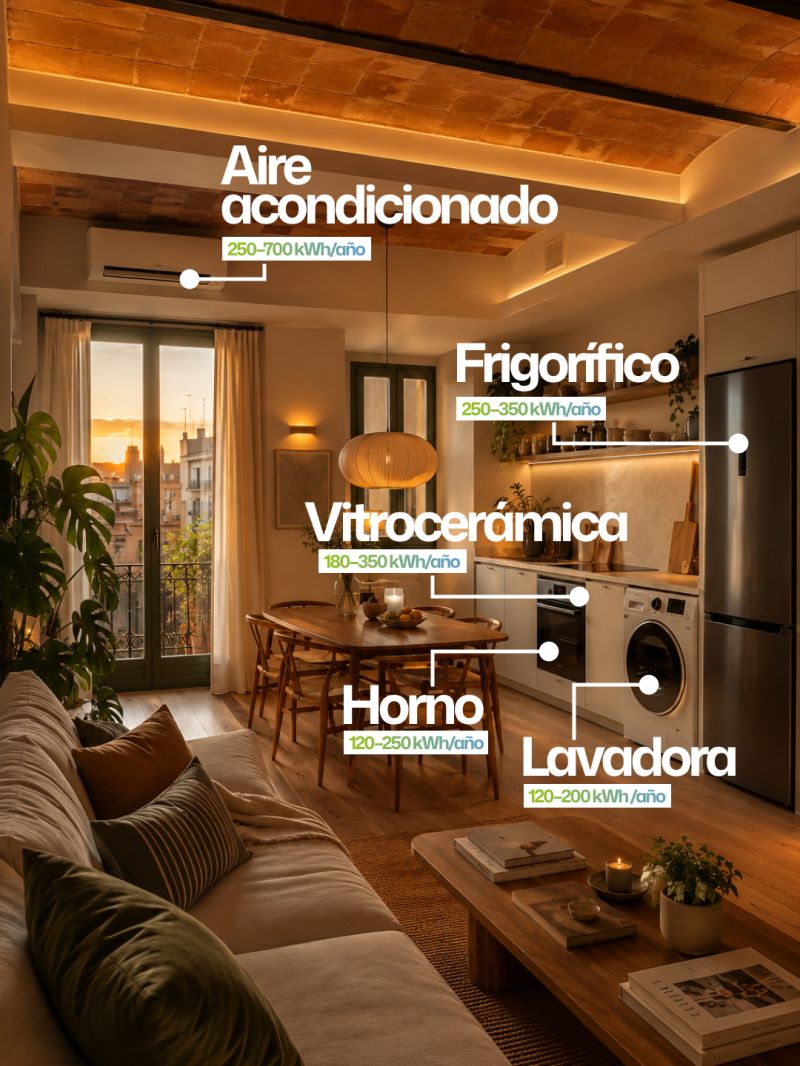
Annual electricity spending does not depend on consumption alone. Two households using 3,500 kWh can pay different amounts because of the power contracted, the hours at which they consume, the type of tariff and any added services. This guide lets you compare scenarios under the same rules and then replace the examples with your own figures.
Published by: Reazziona Renovables, S.L., electricity and gas retailer within Grupo Visalia. Last reviewed: 28 July 2026. The calculator uses the prices published on the panel and states their date and validity. Its scope is limited to Reazziona’s tariffs; see the methodology and corrections policy.
Three annual consumption scenarios
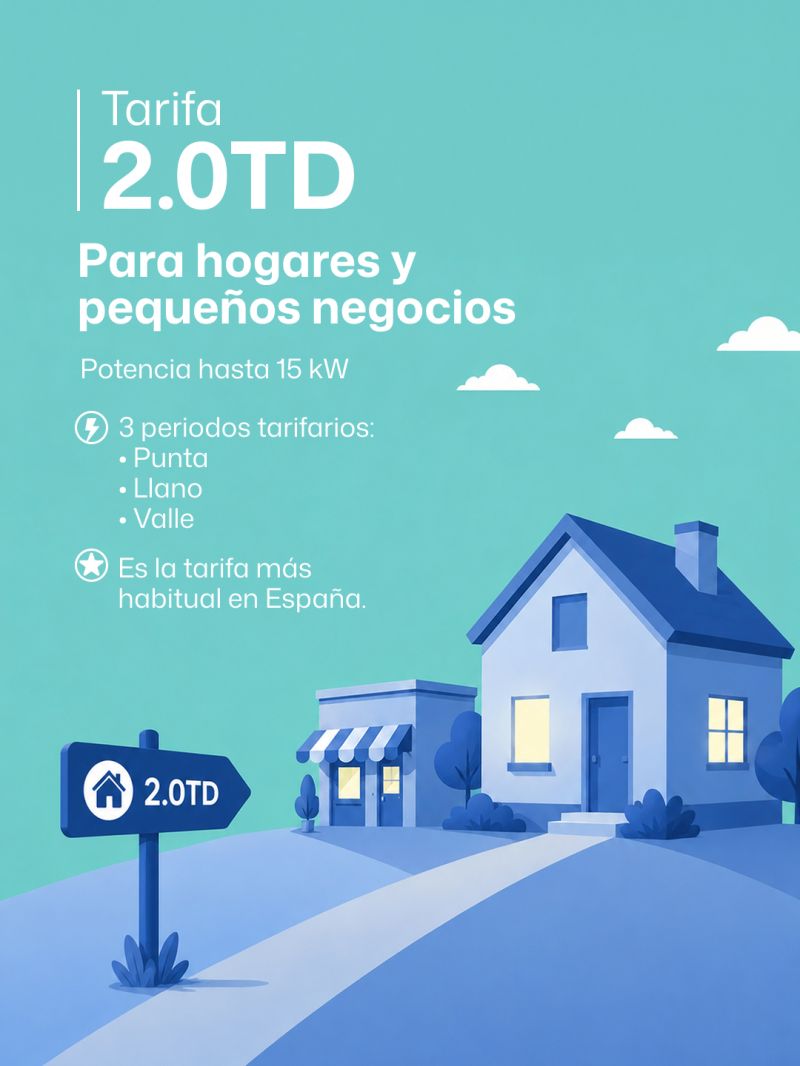
The scenarios below do not represent a universal bill. They serve to convert an annual consumption into kWh per period and apply exactly the same basis to every tariff. The balanced profile splits consumption 30% peak, 30% standard and 40% off-peak. The nights-and-weekends profile splits it 15%, 20% and 65% respectively.
| Annual consumption | Profile | Peak P1 | Standard P2 | Off-peak P3 |
|---|---|---|---|---|
| 2,500 kWh | Balanced | 750 kWh | 750 kWh | 1,000 kWh |
| 2,500 kWh | Nights and weekends | 375 kWh | 500 kWh | 1,625 kWh |
| 3,500 kWh | Balanced | 1,050 kWh | 1,050 kWh | 1,400 kWh |
| 3,500 kWh | Nights and weekends | 525 kWh | 700 kWh | 2,275 kWh |
| 5,000 kWh | Balanced | 1,500 kWh | 1,500 kWh | 2,000 kWh |
| 5,000 kWh | Nights and weekends | 750 kWh | 1,000 kWh | 3,250 kWh |
How to calculate the energy cost
On a tariff with three periods you multiply the consumption of each band by its price: kWh P1 × price P1, kWh P2 × price P2 and kWh P3 × price P3. The sum is the annual energy term. On a single-price tariff you multiply all consumption by the same price.
This calculation shows when a period-based tariff can improve the result. If a meaningful share of consumption moves to off-peak, the low P3 price carries more weight. If consumption is concentrated during the day, the P1 price can change the order of the offers. That is why a generic list of “cheapest tariffs” is no substitute for a comparison based on the household’s real split.
Power is also paid for all year round
To estimate the power term you multiply the contracted kW by the annual price of P1 and P2. A 4.6 kW supply should not be compared with a 3.45 kW simulation without explaining the change: reducing power can generate savings, but it also has to be enough for the appliances running at the same time.
Calculator with published prices
Enter the consumption from your last bill or the sum of the last twelve months. Choose the profile closest to your routine. The result breaks down energy and power, includes the taxes applied on the panel and shows which items are left out.
Work out what you would pay per year.
Enter consumption, power and schedule. The estimate uses the prices published by Reazziona and shows their validity.
-
Home · Península
Luz Precio Único Web
0,119995 €/kWh
Compare with my bill -
Home · Península
Luz fija por periodos Web
0,119806 €/kWh
Compare with my bill -
Home · Península
Luz Indexed price (Fijo-Pool)
0,130207 €/kWh
Compare with my bill -
Home · Baleares
Luz Baleares 2.0TD por periodos
0,153908 €/kWh
Compare with my bill
Prices updated on . Validity confirmed for the consultation date.
What is missing to get close to a real bill
- Meter rental: added according to the equipment and the situation of the supply.
- Additional services: maintenance, insurance or fees have to be added separately.
- Promotions: calculate the first year and the price afterwards when the discount has an end date.
- Unusual consumption: an electric vehicle, a heat pump or a second home can change the profile.
- Validity: check that the prices are still available on the day you sign up.
How to use the result to choose
- Repeat the calculation with the consumption and power shown on your bill.
- Try a second profile if you do not know the exact split by period.
- Compare the annual cost, not just the lowest advertised price per kWh.
- Check the conditions, lock-in, revision terms and services of each offer.
- Verify other retailers with the CNMC before deciding.
See also the guide on how to compare the price per kWh and power, review the published electricity tariffs, check the annual estimate formula or use the comparison tool with your bill.