
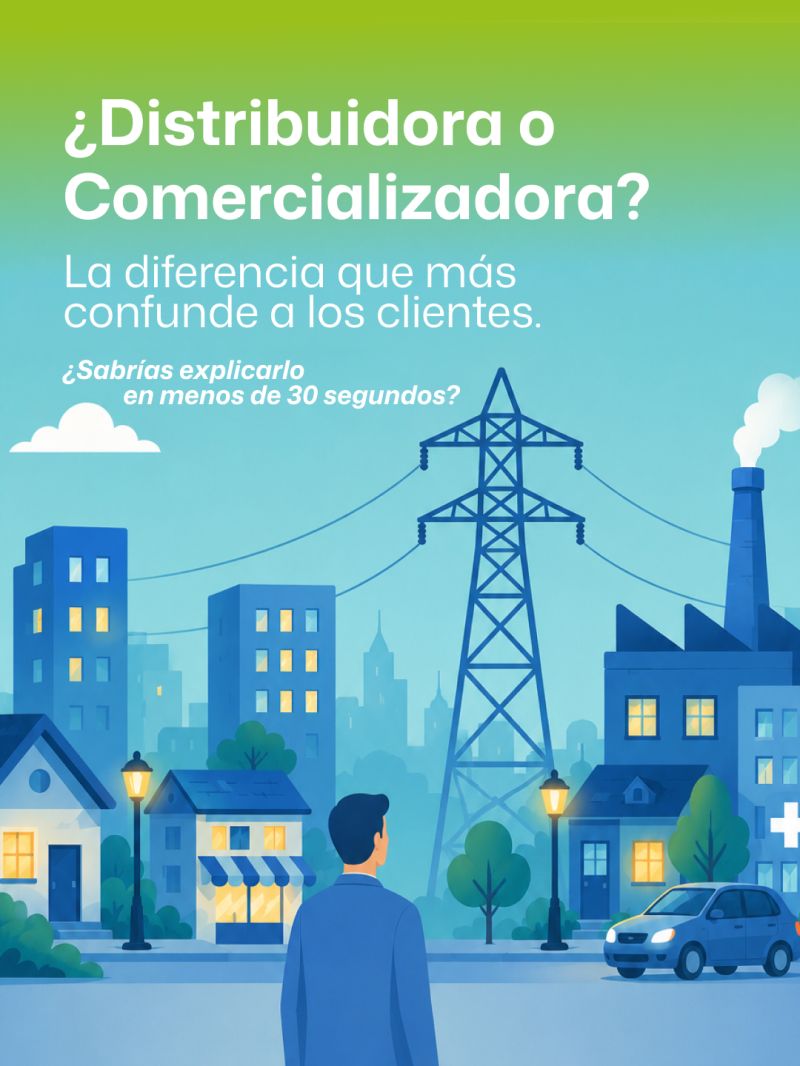
The distributor maintains the local grid and manages meter data; the supplier or retailer offers the tariff, signs the contract and issues the bill. Knowing the difference helps you contact the right company and compare offers properly.
Published by Reazziona Renovables, S.L., an electricity and gas retailer in the Visalia Group. Last reviewed: 29 July 2026. This guide separates regulatory information from Reazziona’s commercial offer.
Electricity distributor vs supplier: the short answer
You cannot choose the distributor: it is assigned by location and operates the physical grid. You can choose the supplier or retailer, which purchases energy, sets the contract terms and bills you. Switching supplier does not change the grid, meter or CUPS supply-point code.
Who to contact in each situation
Your bill must show contract details and a contact for faults and emergencies. This table covers the most common cases in Spain.
| Situation | Main responsibility |
|---|---|
| Area-wide outage, damaged cable or grid incident | Distributor |
| Meter reading or access to consumption data | Distributor |
| kWh price, tariff, discount or contract term | Supplier or retailer |
| Incorrect bill, payment or change of account holder | Supplier or retailer |
| Increase or reduction of contracted power | Supplier, which requests it from the distributor |
| Switching electricity company | New supplier or retailer |

What the electricity distributor does
The distributor is the regulated grid operator in a territory. Its identity does not depend on the retailer brand shown on your supply contract.
- Maintains, expands and repairs the local distribution grid.
- Handles safety incidents and interruptions caused by the grid.
- Manages metering equipment when it owns the meter and supplies official readings.
- Carries out technical changes requested by suppliers and maintains the CUPS record.
What the electricity supplier or retailer does
The supplier is the company you choose to buy electricity from. In Spain’s free market it sets prices and terms; the regulated PVPC tariff is only available from designated reference suppliers.
- Presents the offer, records consent and formalises the contract.
- Issues the bill for energy, power, regulated charges, taxes and services.
- Requests tariff, account-holder or power changes from the distributor.
- Handles questions and complaints about contracts, prices and billing.
How to identify your distributor
Check the contract details or faults section on the bill. The prominent brand is usually the supplier; the faults telephone number identifies the local distributor.
- Find the CUPS code and the faults or emergency contact.
- Check the supplier, tariff name and contract end date.
- Use the distributor portal to download consumption curves and maximum power data.
What happens when you switch supplier
Royal Decree 88/2026 gives electricity consumers the right to switch supplier within ten working days of signing the contract, with an exceptional five-day extension for complex field work. The incoming supplier must request the switch from the distributor within 24 hours on a working day. BOE: Real Decreto 88/2026.
No switching fee may be charged for 2.0TD supplies, although a valid early-termination charge in the previous contract may still apply. An ordinary switch is administrative: it does not require an outage or a meter replacement.
How to compare suppliers without mixing up their roles
Compare annual cost using the same consumption and contracted power: energy, power, taxes, services, price duration and possible penalties. The distributor remains the same, so it is not a reason to choose one offer over another.
For low-voltage bills up to 15 kW, the QR code or electronic link can load consumption by period, power and other data into the CNMC comparison service. Use it to check offers from different companies; Reazziona’s manual calculator compares two proposals entered by the user. CNMC: QR y comparador oficial.
Where to complain about a fault or bill
Complain to the distributor when the issue concerns the grid, meter or continuity of supply. Contact the supplier when it concerns the contract, price or bill. Keep the contract, bills, screenshots and case number. CNMC: comercialización y suministro eléctrico.
Frequently asked questions
- Can I choose the electricity distributor?
- No. The distributor is determined by the supply-point location. You can choose the supplier or retailer.
- Does switching supplier change the CUPS?
- No. The CUPS identifies the supply point and remains unchanged during an ordinary supplier switch.
- Who handles a street-wide power cut?
- The distributor. Its free faults telephone number must appear on the bill.
- Who corrects a miscalculated bill?
- The supplier reviews the bill. If the cause is a meter reading, it requests verification from the distributor.
- How long does a supplier switch take?
- The 2026 rules set a general maximum of ten working days, with an exceptional five-day extension for complex field work.
Now that the roles are clear, compare the complete contract rather than the company name alone.